‘Care for Mental Health Concerns the Whole Person’: Apostolic Nuncio’s Remarks at Saint Luke Institute Benefit
Posted on: October 19, 2026
Videos
Pray with the Pope: For mental health ministry | October 2026
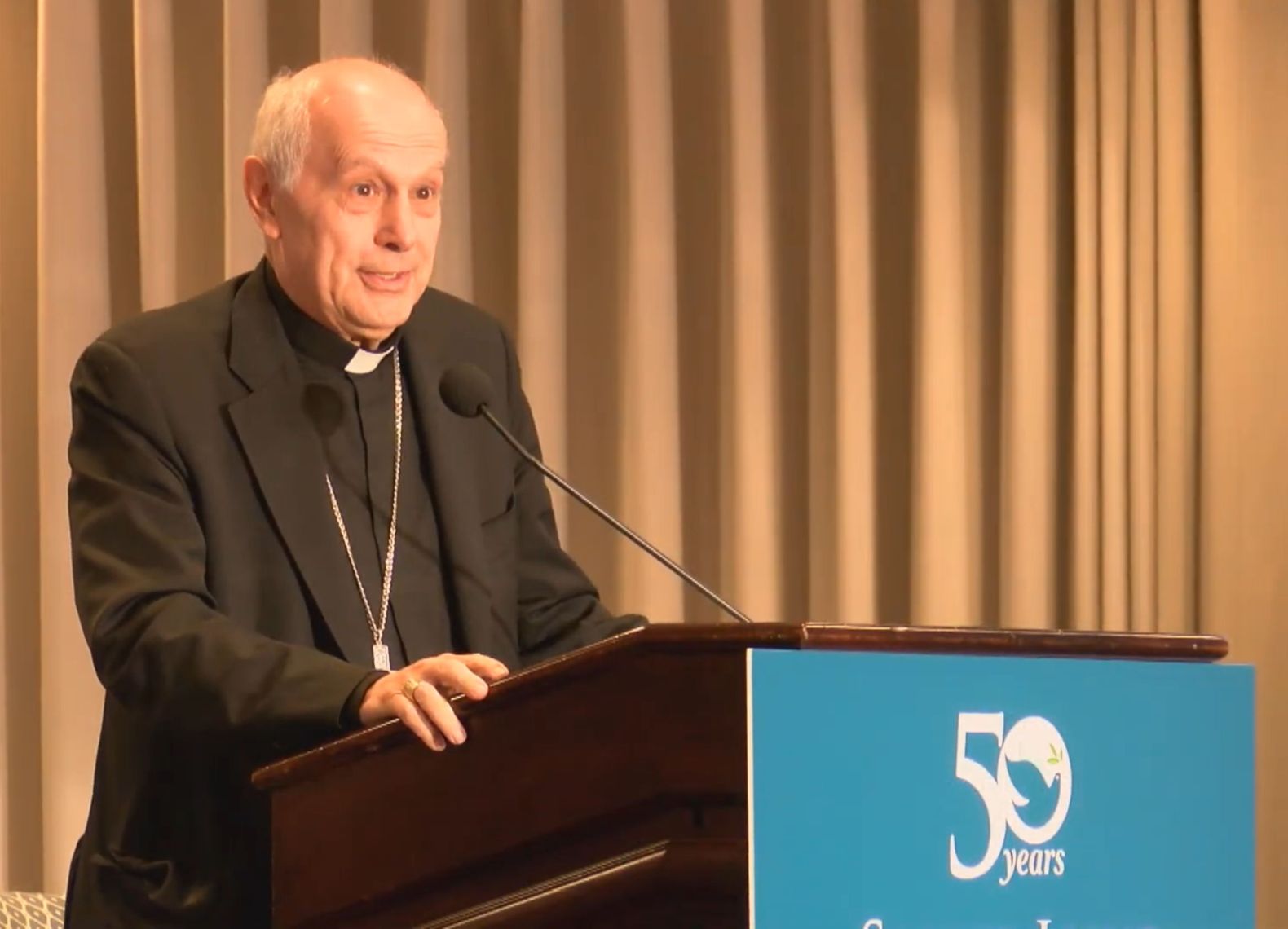
The honored guests at the 2026 Benefit for Saint Luke Institute included Archbishop Gabriele Caccia, the Apostolic Nuncio to the United States. In this role, he serves as Pope Leo XIV’s personal and official representative to the Church in the U.S. and to the U.S. government. The following are his remarks as given at the Benefit event on October 16, 2026 – remarks which included the video presentation of the October intention of the Pope’s Worldwide Prayer Network.
Thank you very much. It is a great joy to be with all of you. Cardinal McElroy, Archbishop Rozanski, Father McDevitt and Sister Salvatrice—all right, I got it right! I would say “Salvatrice” in the Italian way [laughter], but it is a different name. And Sister Mary [Bader] —you will know why I say Sister Mary—distinguished guests and dear friends:
For me it is a joy to be here, and I am very grateful for the prayer Cardinal McElroy offered for the Holy Father. Pope Francis said that the Church is oftentimes like a field hospital. But doctors also get sick. And so the Holy Father, too, is sick—even if not seriously, hopefully. He is doing well, by the way, but we have to wait for the results of the histology to know whether he needs some treatment or not.
But the idea that even the one we consider essential, who helps everyone in different ways, needs help—this is the same situation as this Institute, Saint Luke. In this sense we realize that we are called to be followers of Jesus, but being a follower of Jesus does not mean being a hero, or a superman or superwoman. We keep our humanity. And sometimes it is precisely in the fragility and the scandal of the weakness of the cross that the miracle of redemption actually happens.
Before saying a few words—though he [John Dombrowski] did so well before me that I will just repeat him [laughter]—I wanted to bring you a clip of the Holy Father himself, from before he went to the hospital. Every month he has a prayer intention, and you will discover that this month’s is a special intention for those affected by mental illness. So, also because he is the Holy Father, and also because his English is much better than mine [laughter], let us look at this.
[Pope Leo XIV from the video]
In the name of the Father, and of the Son, and of the Holy Spirit. Amen.
God of life,
You know the innermost depths of our hearts—
the light and shadows within us,
the silent wounds that sometimes no one sees.
Today we bring before you our brothers and sisters
who struggle with challenges to their mental health,
who suffer in solitude with anxiety, depression, or any other mental illness.
You call them by name, with tenderness,
and in You they find dignity and hope.
Forgive us for the times we have looked the other way,
feeding the stigma and discrimination of persons with mental illnesses.
May your Church be an open house,
a safe space where everyone has a place—
a community that accompanies and never excludes,
that listens without judging and draws near without fear.
We pray to you, Lord, for those who care:
professionals, family members, volunteers—
men and women who, with patience and love,
build bridges of understanding and comfort.
Give them strength and compassion to sustain others.
Send your Spirit upon us,
that we may learn to welcome and integrate care for mental health
into the life and ministry of our communities and of the whole Church,
and thus become a living sign of your mercy,
which never abandons and always restores.
The Holy Father asks that the Church become an open house and a safe space. He asks us to listen without judging and not to be afraid to draw near to those who suffer.
There is a question that seems especially appropriate this evening: Who cares for those whose vocation is to care for others? Priests, religious and others in ministry are often present at very difficult moments in people’s lives. They accompany suffering. They carry the concerns of others. But they, too, are human beings, and they, too, sometimes need a place where they can speak honestly and receive help.
The events of this week also remind us how quickly illness brings the unity of the human person into focus. What affects the body touches the whole person, and our interior life is not somehow separate from that. The recent conference in Rome inspired by the Pope’s prayer intention made a similar point: care for mental health concerns the whole person. Professional treatment has its proper place, and so does the accompaniment of the Church.
That is why the work represented here this evening deserves our attention. The Church asks much of those who serve her. It is important that they also be able to receive care when they need it.
I was struck as well by the title chosen for Saint Luke Institute’s new strategic plan: Healing Hearts, Renewing Hope. Hope does not mean pretending that wounds are not there. Sometimes hope begins when a person is able to face a wound truthfully and discover that it does not have to define the rest of his or her life. And when someone who serves the Church is helped to recover that freedom, the effects do not remain with one person. He or she returns to ministry able once again to accompany others.
Next year, Saint Luke Institute will mark fifty years of this work. That anniversary will offer an opportunity not simply to look back, but to ask how the Church can continue to care well for those whom she sends to care for others.
I congratulate Sister Mary Bader on receiving the Saint Luke Award tonight, and I thank all of you who support this work. May St. Luke, physician and evangelist, intercede for those who seek healing and for those who accompany them. Thank you very much.
+ + +
Read more details about the Benefit.