From Awareness to Action—A Path of Healing
Posted on: May 12, 2026
The following message is from Saint Luke Institute President & CEO, Rev. Patrick J. McDevitt, CM, PhD, in recognition of Mental Health Awareness Month (May 2026). A transcript appears below the video.
My dear brothers and sisters in Christ,
May is Mental Health Awareness Month—a time that invites us not only to recognize the reality of mental and emotional struggle, but to enter more deeply into the mystery of the human heart.
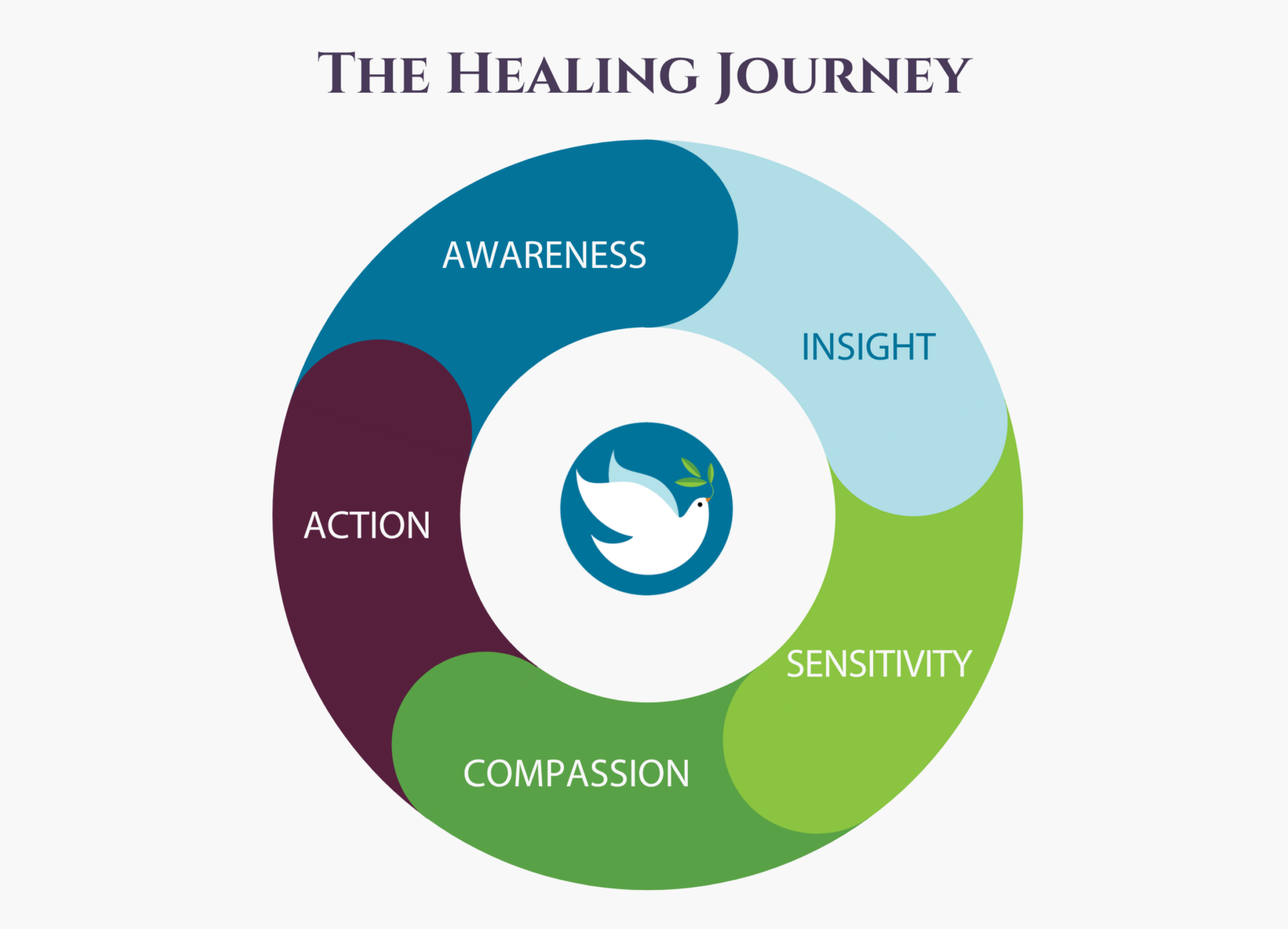
The journey of healing—whether psychological, emotional, or spiritual—often unfolds in a quiet but powerful movement: Awareness → Insight → Sensitivity → Compassion → Action. This movement is not just clinical. It is deeply biblical. It is the way God encounters us—and the way we are called to encounter one another.
Awareness: “Lord, that I may see.” (Luke 18:41)
In the Gospel, the blind man cries out: “Lord, that I may see.” Awareness begins with the desire to see—clearly and truthfully. And yet, so often we move through life without truly seeing. We ignore our own inner struggles. We overlook the pain of others. We become blind to the environments that quietly wound and exhaust people. But Jesus always begins here—with awareness. He asks: “What do you want me to do for you?” Not because He does not know, but because we must name what is real. Healing begins when we stop pretending…and start seeing.
Insight: “Were not our hearts burning within us?” (Luke 24:32)
On the road to Emmaus, the disciples are aware of their disappointment—but they do not yet understand it. It is only when Christ walks with them and interprets their experience that they say: “Were not our hearts burning within us…?”Insight is the gift of understanding. It is when confusion begins to give way to clarity. When we begin to see not only what we feel—but why. In both psychology and spirituality, this is a moment of integration: We begin to name patterns. We come to understand wounds. We recognize how our past shapes our present. Christ does not remove their struggle immediately—He enters into it, and He interprets it.
Sensitivity: “Jesus wept.” (John 11:35)
Perhaps the shortest verse in Scripture is also one of the most profound: “Jesus wept.” Jesus is not distant from human suffering. He is moved by it. Sensitivity is the capacity to be touched by what we see and understand. And in a world that often rewards detachment, efficiency, and control, sensitivity can feel like weakness. But in the Gospel, it is a sign of divine presence. To feel is not a failure. To be affected is not a flaw. Sensitivity allows us to honor the dignity of the person before us—not as a problem to solve, but as a precious life to be reverenced.
Compassion: “He was moved with pity.” (Mark 1:41)
Again and again in the Gospels, we hear: “Jesus was moved with compassion.” The word “compassion “ used here suggests something deep—almost visceral. Compassion is more than feeling. It is entering into another’s experience. In the parable of the Good Samaritan, it is compassion that interrupts routine, breaks through indifference, and changes the course of a life. Compassion says: “I will not leave you alone in your suffering.” For those struggling with mental health, this is often the turning point—not a solution, but a presence.
Action: “Go and do likewise.” (Luke 10:37)
The journey does not end with compassion. Jesus concludes the Good Samaritan with a command:“Go and do likewise.” Action is love made visible. It is reaching out to someone in distress. It is encouraging help and accompaniment. It is creating communities where people feel safe to speak. It is challenging stigma and silence. In Matthew 25, Jesus reminds us: “Whatever you did for one of these least brothers and sisters of mine, you did for me.” Mental health struggles are often hidden—but they are real. And our response must be real as well.
At Saint Luke Institute it is always about “Integrating the Journey.” This movement— Awareness → Insight → Sensitivity → Compassion → Action—is not a one-time path. It is a way of living. It shapes how we see ourselves. How we accompany others. How we build communities. And how we respond to the growing mental health needs in our world.
Bringing It Home: A Mission of Healing
This movement—from Awareness to Action— is not only personal. It is deeply communal. It is ecclesial. It is mission. At Saint Luke Institute, this is at the heart of our strategic vision: Healing Hearts, Renewing Hope: 2030. This vision recognizes a profound reality: That across the Church and the world, priests, religious, and ministry leaders are carrying immense psychological, emotional, and spiritual burdens—often silently. And so, our response is not simply to acknowledge this reality—but to act:
- To expand integrated clinical and spiritual care.
- To accompany those in their most difficult moments.
- To form leaders for healthy and sustainable ministry.
- To build communities of healing and restoration.
- This is Awareness leading to Action.
Partners in Healing: Compassion in Action
But this mission cannot be carried out alone. Healing is never an individual act—it is always a shared work. That is why Saint Luke Institute has the Partners in Healing Society. Partners in Healing are those who choose to move beyond awareness…beyond even compassion…into sustained action. They make healing possible:
- By supporting those who cannot afford care.
- By ensuring that no one is turned away.
- By participating directly in the mission of restoring lives.
I invite you to consider becoming a Partner in Healing—through a monthly, quarterly, or one-time gift. Every gift—no matter the amount makes a real difference in someone’s life.
We are living in a time of profound psychological, emotional, and spiritual strain. But we are also living in a time of great opportunity: To become more attentive. To become more compassionate. To become more fully human. The invitation of this month is simple—but demanding: To see clearly. To understand deeply. To feel honestly. To love compassionately. And to act courageously. Because in the end, mental health awareness is not only about awareness. It is about healing. It is about relationship. And it is about HOPE!
Thank you for listening. God bless you!